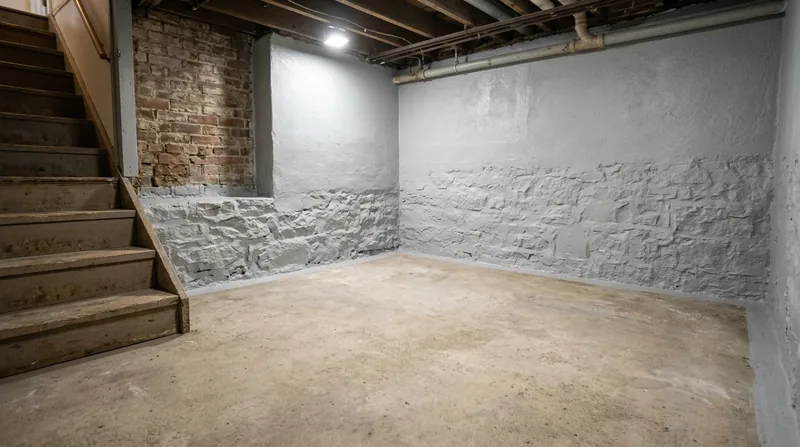




If you have water in the basement after every hard rain in Brooklyn, or you keep smelling a musty basement smell in a Forest Hills Tudor, a Free Basement Inspection in New York City is the fastest way to find out whether you are looking at a simple crack or real hydrostatic pressure. New York City sits on fill, glacial sand and clay over bedrock schist, and the water table runs shallow near the harbor and the tidal rivers. That combination pushes water against old stone and brick foundation walls in Park Slope brownstones, against block walls in Bay Ridge two-families, and against poured walls in 1950s split-levels out in Nassau. We walk the basement with you, photograph the walls and floor, check the sump basin and discharge line, and tell you plainly what needs fixing now and what can wait. If you want the full picture of how we approach wet basements, start with our basement waterproofing service page.
Why a Free Basement Inspection Matters in New York City's Older Housing Stock
Most of the housing here was built before 1950, and the foundation walls have had decades of freeze-thaw winters and nor'easter surge working on them. A hairline crack in a 1920s brick rowhouse cellar is not the same problem as water pushing through a block wall in St. George on Staten Island. The inspection separates the two before anyone quotes a job.
- We check the walls for efflorescence, which is the white salt bloom that tells you water is moving through the masonry.
- We look at the floor-wall joint, where hydrostatic pressure usually shows first in attached homes.
- We test the sump pump and check the check valve and discharge line for freeze damage or backflow.
- We inspect party-wall dampness in rowhouses and brownstones, which is common and often misdiagnosed.
- We check grading, downspout extensions and window wells, because half the water in a Queens basement starts at the roof line and runs down.
By the end of the walkthrough you know which of those conditions you actually have, and which ones you do not.
Key info: In Riverdale and St. George, homes sit on slopes where water drains toward the foundation instead of away from it. We see bowing wall conditions there more often than in flat parts of Queens, and the inspection flags them early. For general guidance on foundation drainage, see the NYC Department of Buildings resources on residential work.
How Our Free Basement Inspection Works in New York City
We do not walk in with a clipboard and a sales pitch. The inspection is a physical survey of the below-grade envelope, done in about an hour for a typical two-family home and longer for a brownstone with a deep cellar. You get photos and a written explanation, not a verbal guess.
- We start outside and check grading, downspout extension, window wells and any visible foundation cracks at grade.
- We move inside and map every crack, damp patch, efflorescence bloom and floor-wall separation.
- We test the sump pump, float, check valve and discharge line, and note the basin condition.
- We check for musty basement smell and visible moisture on stored items, joists and the bottom of the stairs.
- We photograph everything, then sit down and explain what needs fixing now, what can wait, and what is not a problem at all.
If the answer is simple crack sealing, we say so. If the real issue is hydrostatic pressure under the footing, we explain why an interior drain tile system is often the better answer than exterior excavation in a built-up block.
Key info: A homeowner in Valley Stream called us after every heavy rain because the finished side of her basement stayed dry but the utility side stayed wet. The inspection found a failed footing drain and a sump discharge line that emptied two feet from the wall. Neither problem was visible from inside the finished room.
What We Check and What It Tells Us
The table below shows the main conditions we look for during the inspection and what each one usually points to. It is not a quote sheet. It is how we read the evidence in your basement before recommending any work.
| Approach | Description | Best for |
|---|---|---|
| Visual wall and floor survey | Mapping cracks, efflorescence, damp patches and floor-wall separation with photos. | Every basement, especially pre-war brick and stone walls. |
| Sump system test | Float test, check valve, discharge line and basin condition checked under load. | Homes with an existing sump basin or a history of pump failure. |
| Grading and drainage check | Downspout extension, window wells and soil slope measured against the foundation. | Queens and Nassau homes where water runs toward the wall. |
| Party-wall dampness review | Attached rowhouse and brownstone walls checked for shared moisture paths. | Brooklyn and Manhattan attached homes. |
| Moisture and mold-growth review | Visible growth, musty odor and damp materials documented for moisture control planning. | Basements with a recurring musty smell or stored-item damage. |
Free Basement Inspection Cost in New York City: What to Expect
The inspection itself is free, and that is not a teaser. We use it to understand the job before we quote it, because a basement in Mount Vernon with a block wall and a failed drain tile is a different scope than a hairline crack in a Forest Hills brick wall. What you pay for later depends on what the inspection finds.
Factors that move the number include the length of wall that needs sealing, whether the fix is epoxy injection or a full interior perimeter drain, whether a new sump basin and pump are needed, and access. A basement with a finished ceiling and stored furniture takes longer to work around than an empty cellar. Getting two or three estimates is smart, and so is asking each contractor what they found and why. Our full pricing overview explains how we build a quote.
We also tell you when nothing needs doing. If your damp patch is condensation from a humid summer and not groundwater, we will say that and you keep your money.
What to Look for When Hiring a Waterproofing Contractor Near Me in New York City
Basement waterproofing attracts quick-turnaround operators, especially after a nor'easter when everyone with a wet basement is calling. A few checks separate a specialist from a salesman with a truck.
- Confirm the contractor is licensed and insured, and ask for the certificate before work starts.
- Get two or three written estimates and compare what is included, not just the bottom line.
- Ask for references from jobs in your borough and call them.
- Ask who pulls the permit if the work touches structural foundation repair, egress window cutting or the sanitary connection of a sump discharge, and verify the rule with your local building department.
- Ask whether the fix is crack sealing, injection or drainage, and why that method fits your wall type.
A specialist should be able to explain the difference between a foundation crack repair and a drainage problem in plain language. If they cannot, keep calling. You can reach us through our contact page to schedule the free inspection.
Free Basement Inspection in New York City: Pricing Guide
| Service | Price | Details |
|---|---|---|
| Free basement inspection | Free | Full below-grade walkthrough with photos and a written summary of findings, no charge. |
| Crack sealing or injection | Starting at $450 | Epoxy or polyurethane injection priced by crack length, wall thickness and access. |
| Interior drain tile system | On estimate | Linear footage, sump basin location and discharge route set the scope on site. |
| Sump pump replacement | Starting at $650 | Pump capacity, basin condition and whether a battery backup is added. |
| Travel | Included | in New York City and surrounding areas, no separate call-out or mileage fee |
| Estimate | Free | Response within 24h at (929) 392-2158, no obligation to book |
Indicative pricing, the exact cost depends on square footage, finish, and site access. Free personalized estimate within 24h at (929) 392-2158.


